

Groundbreaking Research Shows Humans Possess a “Seventh Sense”
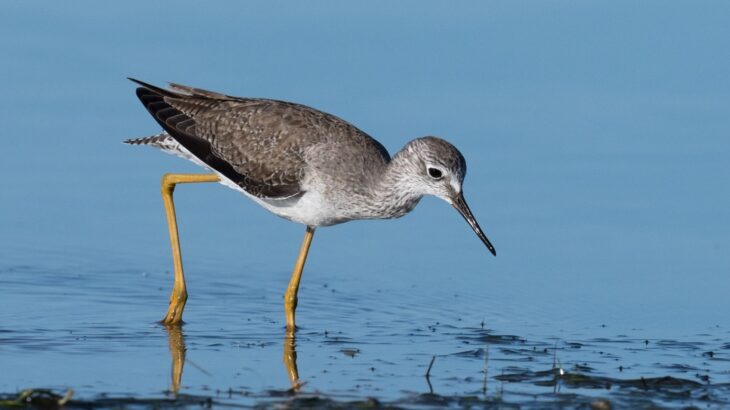
In an exciting new discovery, researchers at Queen Mary University of London and University College London (UCL) have demonstrated for the first time that humans share a remarkable ability with certain shorebirds, a form of remote touch, akin to a “seventh sense.”
Detecting Objects in the Sand
This collaborative effort explored how humans might detect buried objects in sand by sensing subtle mechanical cues transmitted through the medium, without actually seeing or physcially touching them.
Volunteers gently moved their fingertips through sand to locate hidden cubes, and remarkably, the results revealed a comparable ability to that seen in shorebirds, despite humans lacking the specialised beak structures that enable this sense in birds. The study found “that human hands are remarkably sensitive, detecting the presence of buried objects by perceiving minute displacements in the sand surrounding them.”
By combining experimental psychology, physics, and robotics, the team built a robotic system equipped with a tactile sensor and trained via machine learning (LSTM algorithm) to perform the same task. While the robot showed some ability to sense buried objects, it had lower precision (about 40 percent) and more false positives. The study highlights how finely tuned human perception can be.
The report notes that “both humans and robots performed very close to the maximum sensitivity predicted with physical models and displacement.”
Uncovering a Hidden Human Sense
The research further report that “humans can detect objects buried in sand before actual contact, expanding our understanding of how far the sense of touch can reach. It provides quantitative evidence for a tactile skill not previously documented in humans. The findings also offer valuable benchmarks for improving assistive technology and robotic tactile sensing. By using human perception as a model, engineers can design robotic systems that integrate natural-like touch sensitivity for real-world applications such as probing, excavation, or search tasks where vision is limited.”
According to Dr Elisabetta Versace, Senior Lecturer in Psychology at Queen Mary, “It’s the first time that remote touch has been studied in humans and it changes our conception of the perceptual world (what is called the “receptive field”) in living beings, including humans.”
The implications of this research are wide-ranging. It not only challenges long-held assumptions about the boundaries of human touch, but also provides fresh inspiration for assistive technology, robotic exploration, and sensitive probing in granular environments such as archaeological sites.
The studies
Researchers carried out two studies: the first, a human study assessing fingertip sensitivity to tactile cues from buried objects; the second, a robotic experiment using a tactile-equipped robotic arm and a Long Short-Term Memory model to detect object presence.
The authors are Zhengqi Chen, PhD student of Advanced Robotics Lab, Dr Laura Crucianelli Lecturer in Psychology, Dr Elisabetta Versace, Senior Lecturer in Psychology – Queen Mary University of London and Lorenzo Jamone, Associate Professor in Robotics and AI – University College London.
Shared with permission and lightly adapted for brevity by Jessica Livermore.
Photo and original story by QMUL press office.
Find Out More
For more information and related stories:
Study: Exploring Tactile Perception for Object Localization in Granular Media: A Human and Robotic Study
Research first to show humans have remote touch “seventh sense” like sandpipers