
Impact and place
The Science and Engineering South consortium brings together seven universities with a commitment to research excellence and achieving a positive impact from our activities.
Our members invest in high quality science essential for the sustained development of world-leading research that makes a positive impact on the UK economy, our wellbeing and to the world around us.

Nationwide and global
Sustained investment in research excellence over many years has enabled our universities to help tackle the challenges facing our world through their activities. Our research impacts can be felt across the UK and beyond, with communities across the globe feeling the benefits our our member universities’ discoveries.
Spotlight on Excellence Across SES Universities
Researchers from SES member universities have been recognised in the 2026 Royal Society Medals and Awards, with academics from UCL, Oxford and Cambridge honoured for outstanding contributions spanning neuroscience, healthcare technologies, physics, energy research and the biomedical sciences.

Academics elected to the British Academy in 2026
Academics from SES member universities have been elected as Fellows of the British Academy in recognition of their outstanding contributions to the humanities and social sciences.

£60m investment backs next generation of UK AI research
Science and Engineering South (SES) universities will play a leading role in two new artificial intelligence research laboratories funded through a £60 million investment from UK Research and Innovation (UKRI). The initiative will help secure the UK’s position at the forefront of AI research by attracting world-class talent, creating new opportunities for PhD students, and supporting the long-term growth of the UK’s AI sector.
The King’s Birthday Honours 2026
Researchers and leaders from SES member universities were recognised in the King’s Birthday Honours 2026.
Honourees included distinguished academics and innovators from the University of Oxford, Queen Mary University of London, the University of Cambridge, Imperial College London, the University of Southampton and University College London, reflecting the breadth of impact across health, climate science, engineering and education.
Imperial ChemEng Enterprise Day 2026
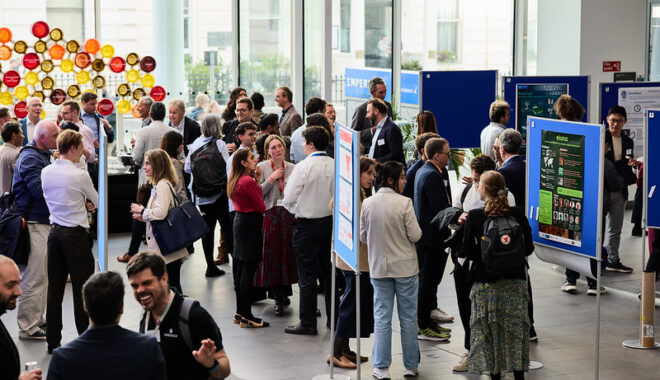
Science & Engineering South (SES) partner Imperial College London brought together founders, investors and researchers for ChemEng Enterprise Day 2026, showcasing a growing pipeline of deep-tech ventures from its Department of Chemical Engineering.
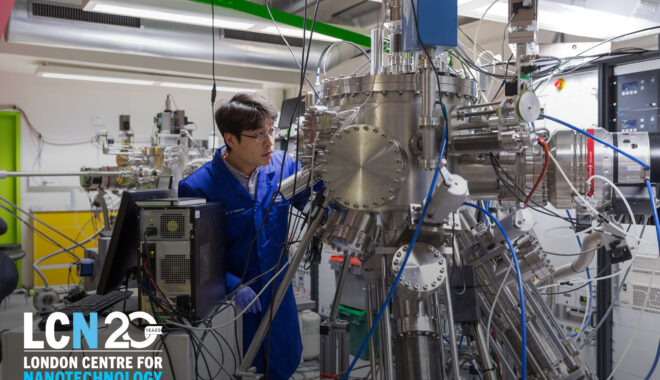
London Centre for Nanotechnology Marks 20 Years of Scientific Innovation and Partnership
Bringing together researchers across Imperial, UCL and King’s, the London Centre for Nanotechnology has spent the last 20 years driving collaborative research at the nanoscale. We spoke with Co-Director Professor Sandrine Heutz about the Centre’s evolution, its impact, and the future of nanoscience in London.
Local and regional
All of our member institutions exist within locations where there are wide reaching inequalities. Some of our catchment areas include communities with among the widest inequality gaps between rich and poor within the UK.
Each of our universities serve unique communities with their own challenges, including areas of inner city London, rural communities in the east of England or the maritime economies of the south coast. Already, our members are ensuring that the impact of their research help to address some of these challenges.
Spotlight on Excellence Across SES Universities
Researchers from SES member universities have been recognised in the 2026 Royal Society Medals and Awards, with academics from UCL, Oxford and Cambridge honoured for outstanding contributions spanning neuroscience, healthcare technologies, physics, energy research and the biomedical sciences.
Academics elected to the British Academy in 2026
Academics from SES member universities have been elected as Fellows of the British Academy in recognition of their outstanding contributions to the humanities and social sciences.
£60m investment backs next generation of UK AI research
Science and Engineering South (SES) universities will play a leading role in two new artificial intelligence research laboratories funded through a £60 million investment from UK Research and Innovation (UKRI). The initiative will help secure the UK’s position at the forefront of AI research by attracting world-class talent, creating new opportunities for PhD students, and supporting the long-term growth of the UK’s AI sector.