

National AI Research Lab Launch
Three SES universities are helping to shape the future of artificial intelligence through the launch of the new Science of Fundamental AI Research (SOFAIR) Lab.
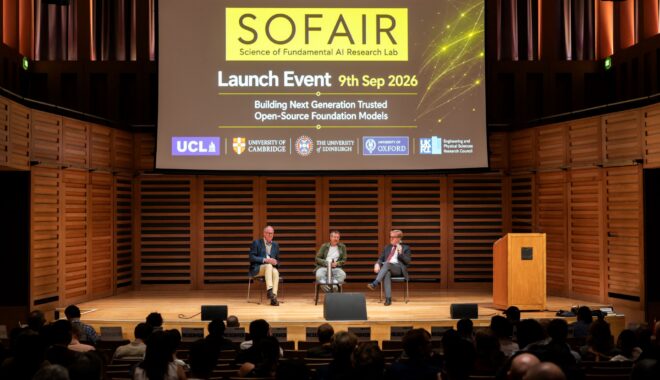
Three SES universities are helping to shape the future of artificial intelligence through the launch of the new Science of Fundamental AI Research (SOFAIR) Lab.

Researchers from SES member universities have been recognised in the 2026 Royal Society Medals and Awards, with academics from UCL, Oxford and Cambridge honoured for outstanding contributions spanning neuroscience, healthcare technologies, physics, energy research and the biomedical sciences.

Academics from SES member universities have been elected as Fellows of the British Academy in recognition of their outstanding contributions to the humanities and social sciences.

Science and Engineering South (SES) universities will play a leading role in two new artificial intelligence research laboratories funded through a £60 million investment from UK Research and Innovation (UKRI). The initiative will help secure the UK’s position at the forefront of AI research by attracting world-class talent, creating new opportunities for PhD students, and supporting the long-term growth of the UK’s AI sector.
Researchers and leaders from SES member universities were recognised in the King’s Birthday Honours 2026.
Honourees included distinguished academics and innovators from the University of Oxford, Queen Mary University of London, the University of Cambridge, Imperial College London, the University of Southampton and University College London, reflecting the breadth of impact across health, climate science, engineering and education.
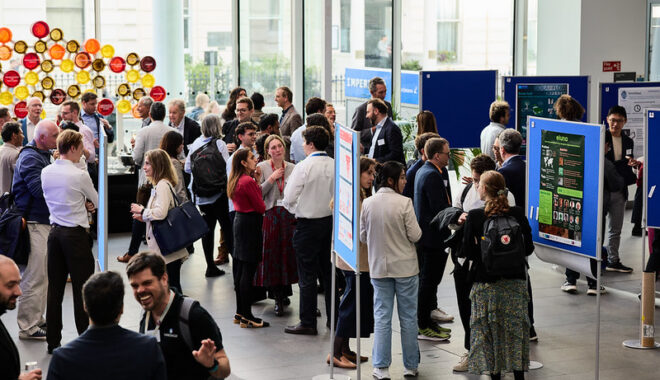
Science & Engineering South (SES) partner Imperial College London brought together founders, investors and researchers for ChemEng Enterprise Day 2026, showcasing a growing pipeline of deep-tech ventures from its Department of Chemical Engineering.

A new study from Queen Mary University of London and University College London shows that humans can detect objects buried in sand before touching them – a form of “remote touch” previously seen in animals like sandpipers.

Hundreds of experts gathered for the first time to explore how artificial intelligence can responsibly shape the future of education and publishing at Cambridge University.
Science Engineering South universities play a leading role across all four Main Panels and 34 Sub-panels of REF 2029, with representation that stretches from medicine and engineering to the sciences, social sciences, and humanities.