
Academics elected to the British Academy in 2026
Academics from SES member universities have been elected as Fellows of the British Academy in recognition of their outstanding contributions to the humanities and social sciences.
Science and Engineering South (SES) universities will play a leading role in two new artificial intelligence research laboratories funded through a £60 million investment from UK Research and Innovation (UKRI). The initiative will help secure the UK’s position at the forefront of AI research by attracting world-class talent, creating new opportunities for PhD students, and supporting the long-term growth of the UK’s AI sector.
Researchers and leaders from SES member universities were recognised in the King’s Birthday Honours 2026.
Honourees included distinguished academics and innovators from the University of Oxford, Queen Mary University of London, the University of Cambridge, Imperial College London, the University of Southampton and University College London, reflecting the breadth of impact across health, climate science, engineering and education.
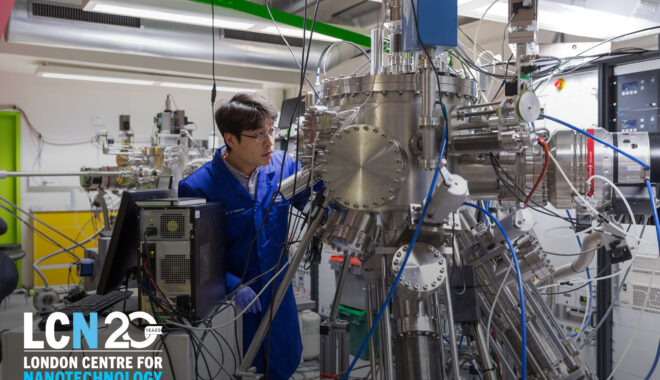
Bringing together researchers across Imperial, UCL and King’s, the London Centre for Nanotechnology has spent the last 20 years driving collaborative research at the nanoscale. We spoke with Co-Director Professor Sandrine Heutz about the Centre’s evolution, its impact, and the future of nanoscience in London.
We put a spotlight on the London Quantum Technology Cluster. An initiative supported by City Hall to establish the capital as a leading global centre for quantum innovation.
Uniting UCL, Imperial College London, and King’s College London, the cluster brings together world-class research institutions with industry, government, investors, and local communities to accelerate the growth of this rapidly evolving sector.
Academics from SES partner universities have been named among the inaugural Fellows of the UK’s new Academy for the Mathematical Sciences, highlighting the region’s strength and national impact.
The Academy brings together leaders from academia, industry, education, and government to advance priorities such as AI, climate, health, security, and quantum technologies.
A new study from Queen Mary University of London and University College London shows that humans can detect objects buried in sand before touching them – a form of “remote touch” previously seen in animals like sandpipers.
The latest Knowledge Exchange Framework (KEF) data show Science and Engineering South (SES) universities’ impact on academic research, society and the economy.
Researchers from Science and Engineering South (SES) universities are among this year’s recipients of the prestigious Philip Leverhulme Prizes, recognising exceptional academic talent and innovation across the UK.
The panel members for the criteria-setting phase of REF 2029 (Research Excellence Framework) were announced in September this year. SES representation across every Main Panel and Sub-panel highlights the outstanding research capability, diversity, and expertise of our universities
The job of curating and sharing research data is vital, but it has traditionally fallen to different groups of people. At UCL a dedicated team of Research Data Stewards has been assembled to work across a range of projects and services, as James Wilson explains.
With a growing recognition of the technical skills needed to underpin modern research, a project has been launched to support a community of professionals with these skills. Jeremy Cohen describes STEP-UP and how it will give this community the infrastructure they deserve.