

National AI Research Lab Launch
Three SES universities are helping to shape the future of artificial intelligence through the launch of the new Science of Fundamental AI Research (SOFAIR) Lab.
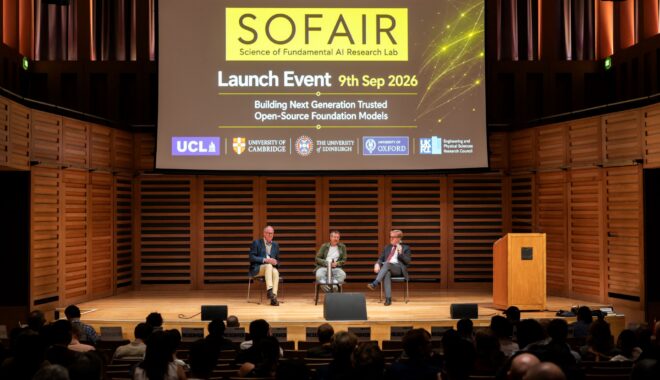
Three SES universities are helping to shape the future of artificial intelligence through the launch of the new Science of Fundamental AI Research (SOFAIR) Lab.

Researchers from SES member universities have been recognised in the 2026 Royal Society Medals and Awards, with academics from UCL, Oxford and Cambridge honoured for outstanding contributions spanning neuroscience, healthcare technologies, physics, energy research and the biomedical sciences.

Academics from SES member universities have been elected as Fellows of the British Academy in recognition of their outstanding contributions to the humanities and social sciences.
Researchers and leaders from SES member universities were recognised in the King’s Birthday Honours 2026.
Honourees included distinguished academics and innovators from the University of Oxford, Queen Mary University of London, the University of Cambridge, Imperial College London, the University of Southampton and University College London, reflecting the breadth of impact across health, climate science, engineering and education.
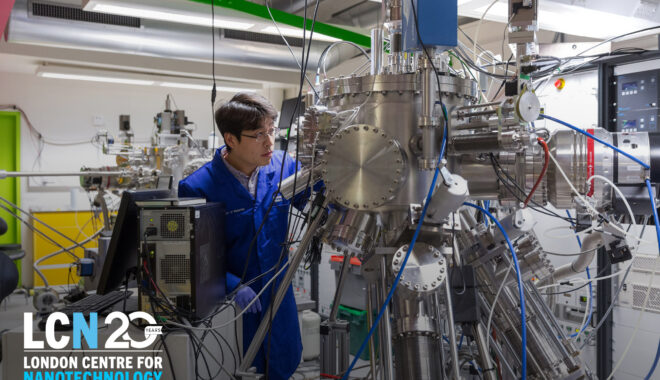
Bringing together researchers across Imperial, UCL and King’s, the London Centre for Nanotechnology has spent the last 20 years driving collaborative research at the nanoscale. We spoke with Co-Director Professor Sandrine Heutz about the Centre’s evolution, its impact, and the future of nanoscience in London.
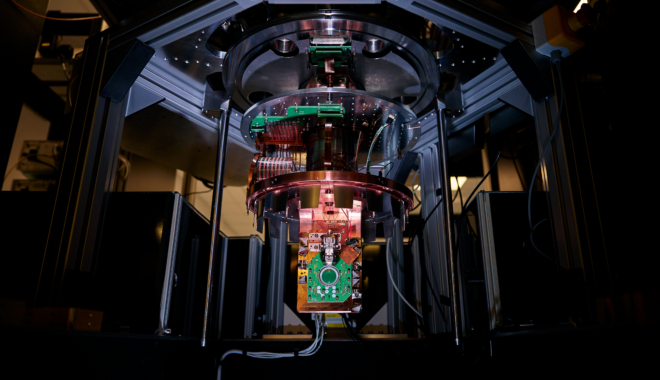
The UK’s most powerful quantum computer will be based at the University of Cambridge. It is part of a major new partnership with IonQ, the University’s largest corporate research collaboration.
Academics from SES partner universities have been named among the inaugural Fellows of the UK’s new Academy for the Mathematical Sciences, highlighting the region’s strength and national impact.
The Academy brings together leaders from academia, industry, education, and government to advance priorities such as AI, climate, health, security, and quantum technologies.

The latest Knowledge Exchange Framework (KEF) data show Science and Engineering South (SES) universities’ impact on academic research, society and the economy.
The panel members for the criteria-setting phase of REF 2029 (Research Excellence Framework) were announced in September this year. SES representation across every Main Panel and Sub-panel highlights the outstanding research capability, diversity, and expertise of our universities

Universities are regional anchors and integral to their ‘place’ with many examples of collaborating on scientific research with communities. Here are some recent community-led research activities by our members.

Celebrating the collective successes of Science and Engineering South member universities in the UK Knowledge Exchange Framework

A report published by the Higher Education Policy Institute unpicks assumptions about the spread of research funding across the UK’s regions.