

Academics elected to the British Academy in 2026
Academics from SES member universities have been elected as Fellows of the British Academy in recognition of their outstanding contributions to the humanities and social sciences.

Academics from SES member universities have been elected as Fellows of the British Academy in recognition of their outstanding contributions to the humanities and social sciences.
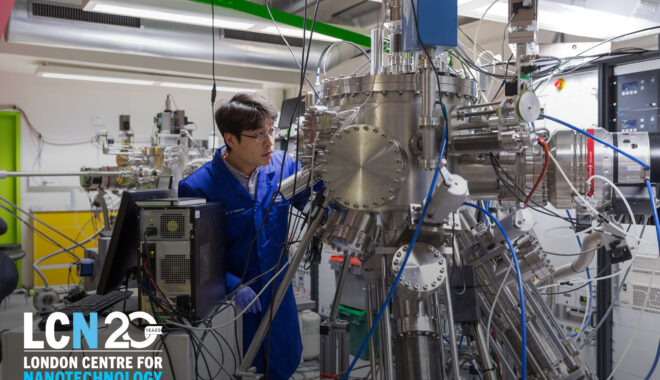
Bringing together researchers across Imperial, UCL and King’s, the London Centre for Nanotechnology has spent the last 20 years driving collaborative research at the nanoscale. We spoke with Co-Director Professor Sandrine Heutz about the Centre’s evolution, its impact, and the future of nanoscience in London.

We put a spotlight on the London Quantum Technology Cluster. An initiative supported by City Hall to establish the capital as a leading global centre for quantum innovation.
Uniting UCL, Imperial College London, and King’s College London, the cluster brings together world-class research institutions with industry, government, investors, and local communities to accelerate the growth of this rapidly evolving sector.

Academics from SES partner universities have been named among the inaugural Fellows of the UK’s new Academy for the Mathematical Sciences, highlighting the region’s strength and national impact.
The Academy brings together leaders from academia, industry, education, and government to advance priorities such as AI, climate, health, security, and quantum technologies.

The latest Knowledge Exchange Framework (KEF) data show Science and Engineering South (SES) universities’ impact on academic research, society and the economy.

Researchers from Science and Engineering South (SES) universities are among this year’s recipients of the prestigious Philip Leverhulme Prizes, recognising exceptional academic talent and innovation across the UK.
The panel members for the criteria-setting phase of REF 2029 (Research Excellence Framework) were announced in September this year. SES representation across every Main Panel and Sub-panel highlights the outstanding research capability, diversity, and expertise of our universities

Universities and the ground-breaking research from their dedicated teams have long influenced the conversations and change connected to COP. Here are highlights from some of our members’ COP-related research and activities.
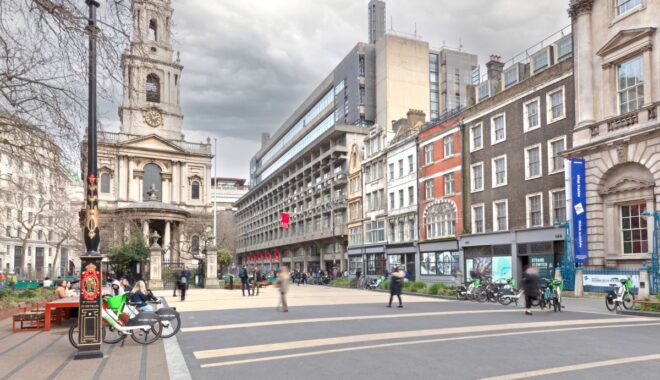
More than a third of the impact generated by King’s College London’s knowledge exchange and research activities occurred outside the capital, a report by London Economics reveals.
Some 4,000 students will benefit from a £1bn investment in doctoral training centres for engineering and physical sciences, with SES members lead partners in almost a third of them.

Our partner universities are at the cutting edge of research. They constantly strive to create environments where new ideas can flourish, and innovation is second nature.
Spin-outs have the potential to redefine how research, patient care and product development is handled in the future. Find out about SES members’ spin-out activities.