
Skip to main content Skip to footer

National impact

London Centre for Nanotechnology Marks 20 Years of Scientific Innovation and Partnership

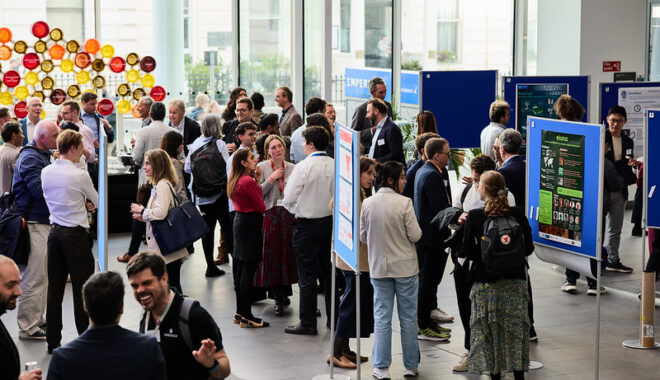
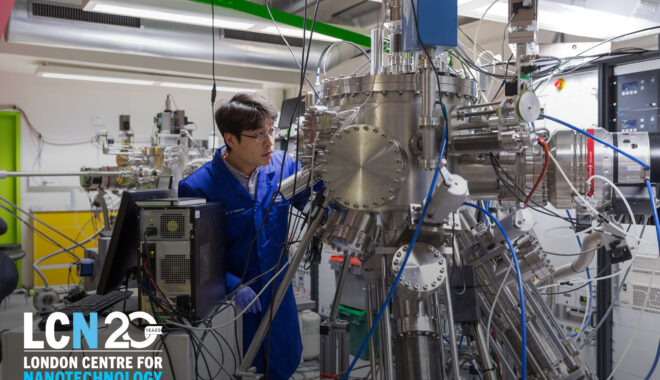
Bringing together researchers across Imperial, UCL and King’s, the London Centre for Nanotechnology has spent the last 20 years driving collaborative research at the nanoscale. We spoke with Co-Director Professor Sandrine Heutz about the Centre’s evolution, its impact, and the future of nanoscience in London.

IonQ Quantum

UK’s Most Powerful Quantum Computer

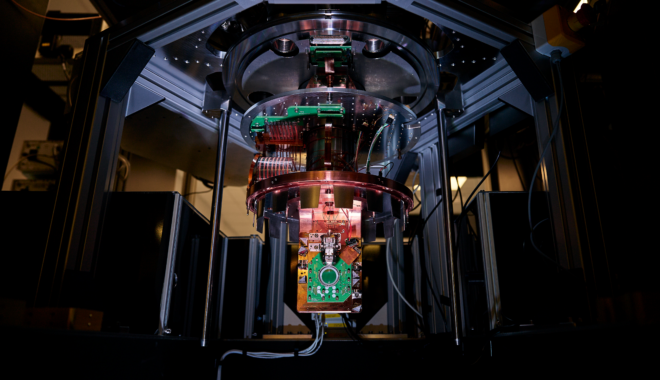
The UK’s most powerful quantum computer will be based at the University of Cambridge. It is part of a major new partnership with IonQ, the University’s largest corporate research collaboration.

abstract blue lights

London Quantum Cluster (LQC) – Where Quantum Comes Together

We put a spotlight on the London Quantum Technology Cluster. An initiative supported by City Hall to establish the capital as a leading global centre for quantum innovation.

Uniting UCL, Imperial College London, and King’s College London, the cluster brings together world-class research institutions with industry, government, investors, and local communities to accelerate the growth of this rapidly evolving sector.

Fellows from SES partner universities named in inaugural cohort

Academics from SES partner universities have been named among the inaugural Fellows of the UK’s new Academy for the Mathematical Sciences, highlighting the region’s strength and national impact.

The Academy brings together leaders from academia, industry, education, and government to advance priorities such as AI, climate, health, security, and quantum technologies.

Lesser YellowLegs Shorebird

Groundbreaking Research Shows Humans Possess a “Seventh Sense”

A new study from Queen Mary University of London and University College London shows that humans can detect objects buried in sand before touching them – a form of “remote touch” previously seen in animals like sandpipers.

person looking at rows of books

SES Universities Lead the Way in Impact

The latest Knowledge Exchange Framework (KEF) data show Science and Engineering South (SES) universities’ impact on academic research, society and the economy.

Connecting Cambridge AI Summit: Human-Centred Innovation Takes the Lead

Hundreds of experts gathered for the first time to explore how artificial intelligence can responsibly shape the future of education and publishing at Cambridge University.

theatre hall

SES Academics Shine Among 2025 Philip Leverhulme Prize Winners

Researchers from Science and Engineering South (SES) universities are among this year’s recipients of the prestigious Philip Leverhulme Prizes, recognising exceptional academic talent and innovation across the UK.

REF 2029 Panel Members – Shaping the Future of UK Research 

The panel members for the criteria-setting phase of REF 2029 (Research Excellence Framework) were announced in September this year. SES representation across every Main Panel and Sub-panel highlights the outstanding research capability, diversity, and expertise of our universities

SES REF 2029 Panel Member announcements

Science Engineering South universities play a leading role across all four Main Panels and 34 Sub-panels of REF 2029, with representation that stretches from medicine and engineering to the sciences, social sciences, and humanities.

Imperial New Amputee Material

Imperial College London Develops Revolutionary Adaptive Material to Improve Prosthetic Limb Comfort

Researchers at Imperial College London have developed Roliner, a revolutionary new material that allows amputees to adjust the fit of their prosthetic limb liners.

Escape room participants (Brendan Foster Photography)

Escape the Clinic! The PRESTIGE-AF escape room

When Imperial College London wanted to raise awareness of a clinical trial investigating strokes, they developed a pop up escape room to engage with people.